Troubleshooting
Forensic Breakdown: The Overloaded Electrical Panel
Back to Articles Back to all articles
"Is your panel keeping up with modern demand, or are you ignoring the tell-tale signs of a thermal meltdown?"
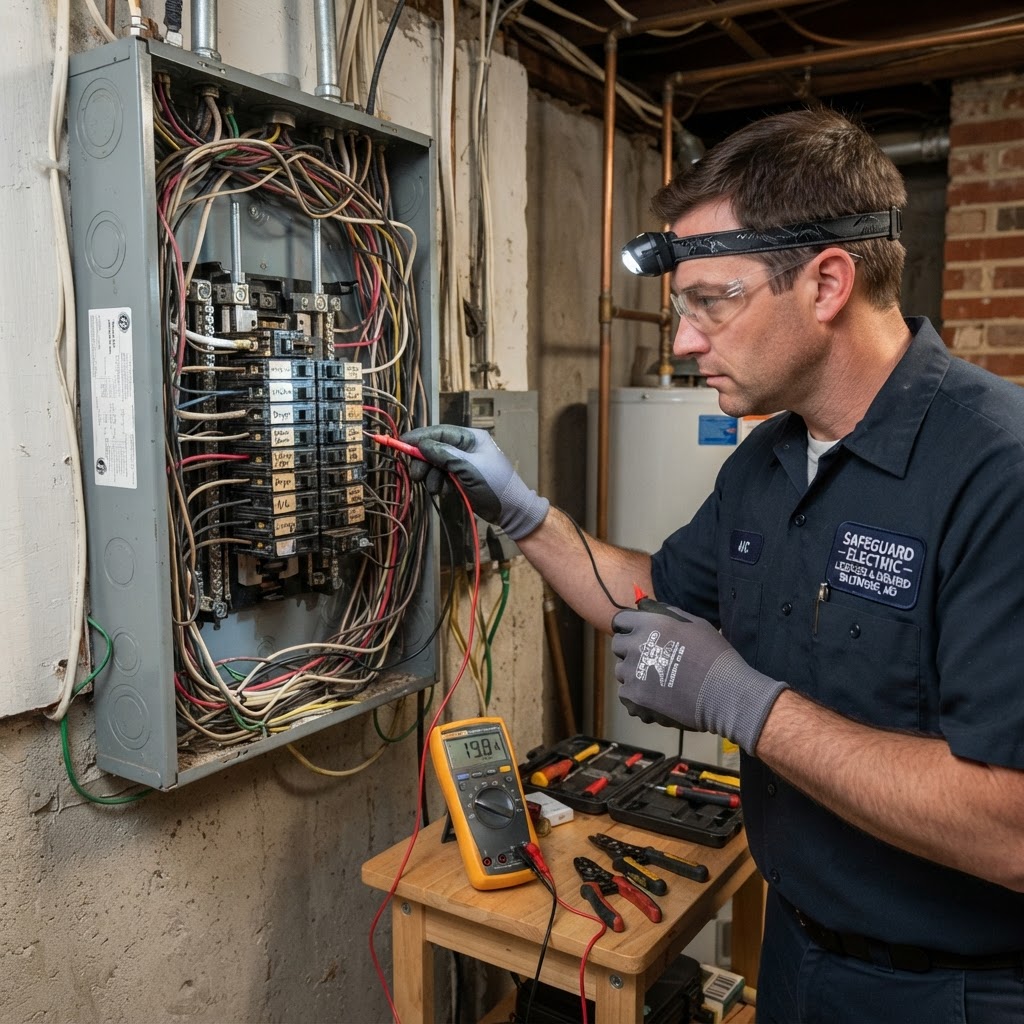
An overloaded panel is the result of cumulative electrical demand exceeding your system's design capacity, typically manifesting as frequently tripping breakers, flickering lights during appliance startup, or audible buzzing from the busbars. When a panel is pushed beyond its rating, it enters a state of thermal stress that degrades insulation and risks internal arcing. If you detect a burning, acrid plastic smell, this is an immediate emergency: shut off the main breaker and contact a professional. We treat these symptoms as a forensic indicator that your home’s infrastructure has been compromised by cumulative load increases that surpass the original capacity.
TECHNICAL ANOMALIES
When a circuit breaker trips repeatedly, it is doing its job by preventing a catastrophic fire, but it also signals a fundamental mismatch between load and capacity. Many homeowners treat these trips as minor nuisances, applying a cognitive bypass by merely flipping the handle back to the 'on' position. This practice masks an as-built anomaly where the wiring and protection devices are no longer congruent with the installed electrical load. Relying on such a field-expedient fix ignores the reality that internal components—specifically the busbars and breaker stabs—may already be suffering from heat fatigue.
THE ROLE OF LEGACY SPECS
Many homes in Baltimore were constructed under legacy specs that never anticipated the modern power requirements of high-efficiency HVAC systems, EV chargers, and smart home ecosystems. What worked in the mid-twentieth century is often a retro-fit nightmare today. We often observe panels that have been pushed to their absolute limits, violating the safety margins established by the Baltimore City Building Code. Attempting to force additional circuits into an already saturated panel is a dark pattern that invites long-term degradation of your home's electrical backbone.
DIAGNOSTIC LIMITS
An inspector blind spot often involves overlooking subtle signs of heat damage within the panel enclosure, such as discolored wire insulation or pitted contact points. Because electrical systems are dynamic, surface-level observation is insufficient. Professional assessment requires load calculations and physical inspection of terminations to ensure that current density remains within safe operational parameters. If your panel is hot to the touch, you are witnessing the physical manifestation of failure.
RELATED QUESTIONS
Q: Does a humming noise in my panel mean it needs replacing? A: Humming can indicate loose connections or failing breakers, both of which require professional evaluation to prevent arcing. Q: Why do my lights dim when the AC kicks on? A: This often points to a service drop or panel capacity issue where the electrical system struggles to handle the high inrush current of motorized appliances. Q: Can I just install a higher-rated breaker to stop the tripping? A: Absolutely not. This is a hazardous violation that ignores wire gauge limits and risks starting an electrical fire.
Published 2026-10-04
Take Action: For a comprehensive assessment of your electrical system and a professional determination of your panel's health, contact Charm City Electric at CharmCityElectric.com or (443) 469-9371.
Call (443) 469-9371