How to Hire a Licensed Electrician in Baltimore, MD
A practical Baltimore homeowner checklist for verifying an electrician, understanding permits, and comparing the work—not just the price.
Hiring an electrician should make a repair easier—not leave you guessing about licenses, permits, or what is included in the work.
Quick answer
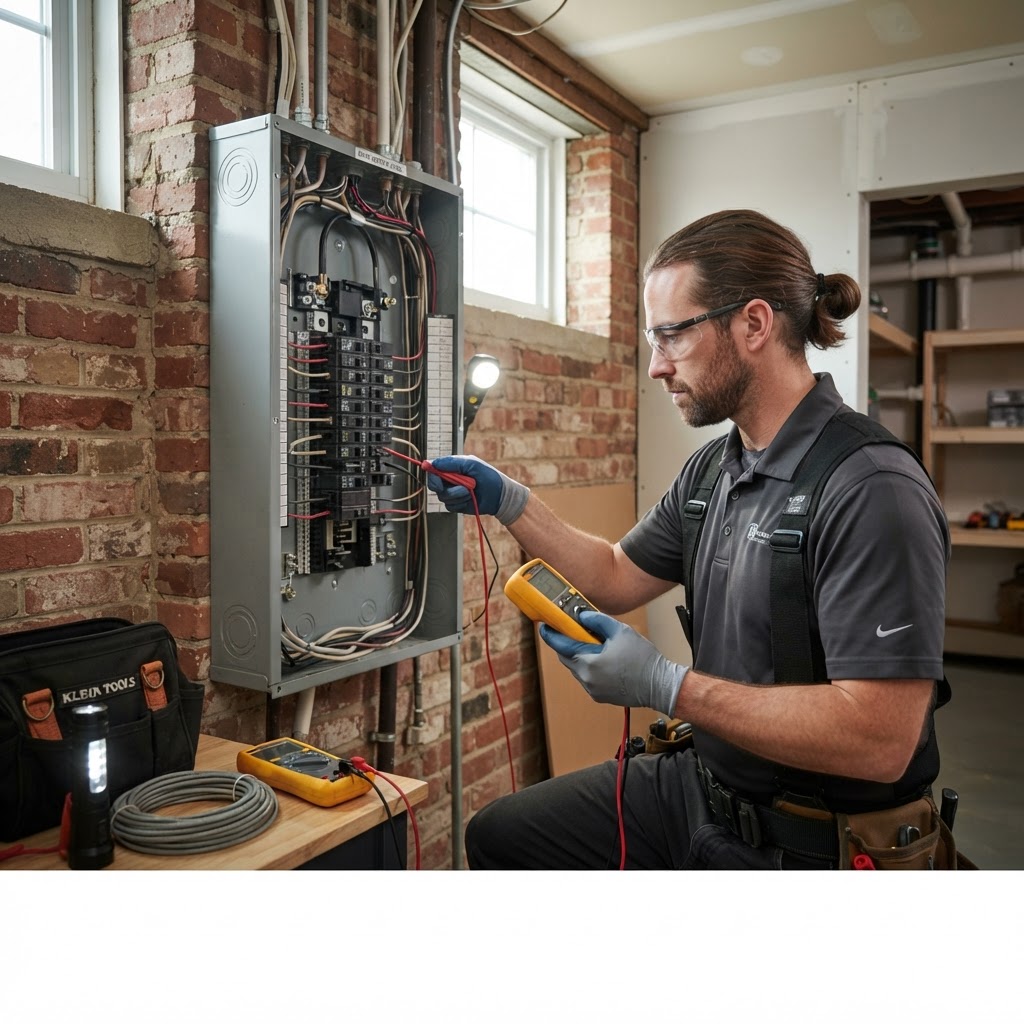
For electrical work in Baltimore, start by verifying the electrician’s Maryland license, asking who will obtain any required permit, and getting a written scope that explains the work. A professional should also be willing to explain what was found, what is being proposed, and which parts of the job require inspection.
Maryland’s State Board of Electricians says electrical work in the state must be performed by a licensed Master, Journeyperson, or Apprentice Electrician. Homeowners can use the state’s official verification process rather than relying only on a number printed on a truck, estimate, or website.
1. Verify the license through Maryland’s official source
Ask for the electrician’s full name and license number, then check the Maryland State Board of Electricians and its license verification page.
Charm City Electric lists Maryland Master Electrician license #14248. You can verify any contractor’s current license information through the state before work begins.
License verification is one useful check, but it is not the entire hiring decision. Also ask who will perform the work, whether helpers are working under appropriate supervision, and whether the company will be responsible for the permit and inspection when required.
2. Confirm the permit plan for your address
Permit rules depend on the location and scope of the work. Baltimore City and Baltimore County use different permitting systems.
The Baltimore City electrical code generally requires a permit before electrical work begins unless a specific exception applies. Baltimore City also states that an electrical permit application must identify the insured, licensed electrician responsible for the work. City permit services are available through the Department of Housing and Community Development.
Baltimore County’s electrical-permit guidance says a licensed electrical contractor registered with the County applies for the permit. Its guidance covers circuit extensions, new installations, low-voltage wiring, and equipment connections.
Do not assume a project is exempt because it sounds small. Ask the electrician to confirm the rule that applies to the exact address and scope. A clear written proposal should say who obtains the permit, whether an inspection is expected, and whether permit fees are included or separate.
3. Compare the written scope—not only the bottom line
Electrical estimates are easier to compare when they describe the same work. A useful written scope may identify:
- The problem or requested improvement
- The circuits, panel, fixtures, or equipment involved
- The repair, replacement, or diagnostic work included
- Permit and inspection responsibility
- Any access, patching, or restoration that is excluded
- How unforeseen conditions and change orders will be handled
- The proposed equipment or material specifications when relevant
The lowest number can represent a different scope. If one proposal includes a permit, inspection, troubleshooting time, or panel corrections and another does not, ask for clarification before comparing them.
4. Ask questions that fit Baltimore’s older homes
Baltimore-area rowhouses and older detached homes may contain several generations of electrical work. Age alone does not prove a system is unsafe, and an older installation is not automatically required to be rebuilt to every current standard. The important questions are whether the present system is safe, whether alterations were made correctly, and whether it can support the loads now being placed on it.
Useful questions include:
- Are there ungrounded receptacles or older wiring methods?
- Is there evidence of overheating, loose connections, corrosion, or improper splices?
- Does the panel have enough capacity for the proposed work?
- Will plaster, masonry, finished basements, or tight rowhouse chases affect access?
- Does the project require new grounding, bonding, GFCI, or AFCI protection?
- What must be corrected now, and what is an optional future improvement?
A careful electrician should separate observed conditions from assumptions and explain why a recommendation matters.
5. Treat warning signs as safety issues, not nuisances
The Electrical Safety Foundation International identifies frequent breaker trips, warm or discolored wall plates, buzzing or sizzling from receptacles, flickering lights, burning odors, and mild shocks as warning signs of overloads or wiring problems.
If you notice heat, smoke, sparking, or a burning odor, move away from the affected equipment and call 911 if there is an active fire. Do not remove a panel cover or touch exposed wiring. For recurring trips, buzzing, flickering, or dead outlets, a professional troubleshooting and safety evaluation can identify the cause before a repair is proposed.
6. Expect a clear explanation at the end
Before the job closes, ask what was repaired or installed, whether the permit and inspection steps are complete, and whether any limitations or follow-up items remain. Keep the written scope, invoice, permit information, and equipment documentation with the home’s records.
Good electrical work is not defined by technical language. It is defined by a verifiable license, an appropriate permit and inspection process, a clear scope, safe workmanship, and communication you can understand.
Sources
- Maryland State Board of Electricians
- Request a Verification of Licensure — Maryland State Board of Electricians
- Section 2703. Permit and Certificate of Inspection — City of Baltimore Law Library
- Section 2706. Permits — City of Baltimore Law Library
- Permits, Inspections, Registrations, and Licensing — Baltimore City
- Electrical Permit — Baltimore County Government
- Don’t Overload Your Home — Electrical Safety Foundation International
Frequently asked questions
What should I check before hiring a Baltimore electrician?
Verify the electrician’s license through the Maryland State Board of Electricians, confirm who will handle any required permit and inspection, and compare written scopes that describe the same work.
Do I need an electrical permit in Baltimore?
It depends on the address and exact scope. Baltimore City generally requires a permit unless a specific exception applies, while Baltimore County publishes its own electrical-permit requirements. Ask the electrician to confirm the rule for your project in writing.
How can I verify an electrician’s Maryland license?
Use the Maryland State Board of Electricians’ official verification process. Charm City Electric lists Maryland Master Electrician license #14248; the state source is the place to confirm current license information.
What electrical warning signs should a homeowner take seriously?
Frequent breaker trips, warm or discolored outlets, buzzing or sizzling, flickering lights, burning odors, sparks, or shocks can indicate a wiring or overload problem. Do not open the panel or touch exposed wiring.
Does an older Baltimore home automatically need a complete rewiring?
No. Age alone does not establish that a system is unsafe. An evaluation should distinguish observed hazards, code requirements triggered by new work, capacity limitations, and optional improvements.
What can I safely check before calling an electrician?
You can confirm that a device is firmly plugged in and, if there is no heat, smoke, burning odor, sparking, or water nearby, note whether a breaker has tripped. Do not remove covers or repeatedly reset a breaker that trips again.
Need help diagnosing an electrical problem or planning an upgrade? Call or text Charm City Electric at (443) 469-9371, or use the contact form to share project details.
Next steps
Published 2026-09-22 · Updated 2026-10-07