Service Upgrades
Service Capacity: Is Your Older Baltimore Home Overloaded?
Back to Articles Back to all articles
"Does your historic Baltimore home struggle to keep up with modern electrical demands?"
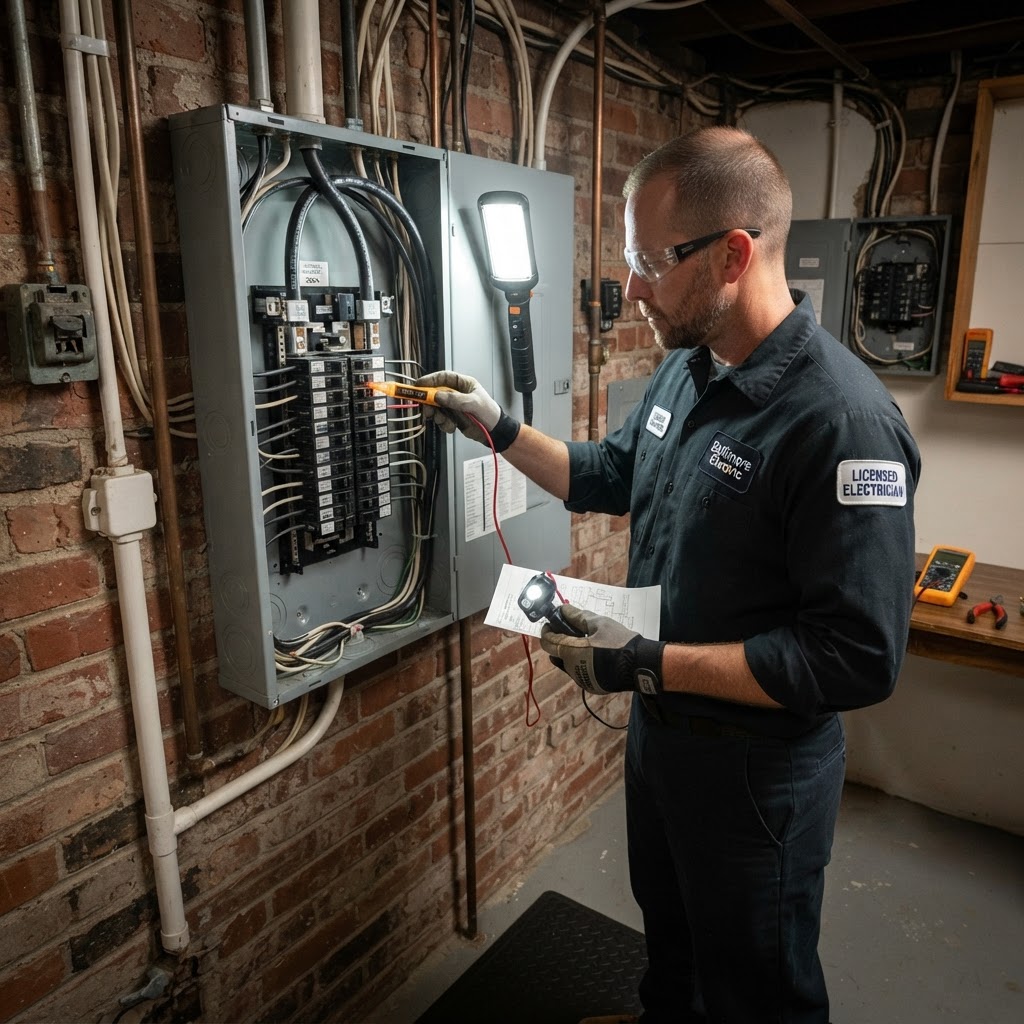
The answer is a resounding yes if your home exhibits the classic symptoms of electrical under-capacity, a common "as-built anomaly" in residences predating the widespread adoption of high-draw electronics. Older Baltimore homes, particularly those constructed over 25 years ago, frequently rely on outdated 50-60 amp electrical services. These systems were designed for a "cognitive bypass" of the power needs we have today, leading to a "retro-fit nightmare" when trying to power multiple appliances, HVAC systems, or electric vehicle chargers. If you're experiencing frequent circuit breaker trips, lights dimming when large appliances kick on, or even faint burning smells emanating from your electrical panel, it's a critical warning sign.
These indicators are not minor inconveniences; they point to a system operating beyond its design limits. A "legacy spec" that deemed 60 amps sufficient is now dangerously inadequate. The failure mechanism is straightforward: the wires and breakers are designed to handle a specific amperage. When demand exceeds this, wires can overheat, posing a significant fire risk. This can manifest as crackling sounds from outlets or switches, visible rust or corrosion on the panel itself, and an over-reliance on "field-expedient fixes" like extension cords to compensate for insufficient outlets and capacity. Such workarounds are a "dark pattern" that masks a deeper, more hazardous issue.
Modern electrical standards, guided by the National Electrical Code (NEC) as adopted by Baltimore City, strongly recommend a minimum of 200 amps for residential properties. This upgraded capacity ensures your home can safely and efficiently power contemporary life, from your home office setup to energy-efficient heat pumps. Ignoring these warning signs is not an "inspector blind spot" we should allow; it's an active risk to your property and family. Charm City Electric understands the unique electrical landscape of Baltimore's older neighborhoods and can provide a "forensic breakdown" of your current system's capabilities.
Addressing an insufficient service capacity is not merely about convenience; it's a fundamental safety upgrade. It prevents dangerous overheating, reduces the risk of electrical fires, and ensures your home's electrical infrastructure can support your present and future needs. Compliance with Baltimore City electrical codes (Article 230 of the Building Codes, for instance) is paramount. We perform thorough assessments to identify the exact cause of your electrical strain and recommend the most effective and safe solution, distinguishing genuine needs from unnecessary upgrades.
RELATED QUESTIONS
Q: How often do circuit breakers trip in my home?
A: Frequent tripping indicates your system is overloaded, often requiring an upgrade.
Q: Is it safe to use many extension cords?
A: Relying heavily on extension cords suggests your home's wiring is insufficient and poses a fire hazard.
Q: What are the signs of an overheating electrical panel?
A: Burning smells, discoloration, or a warm panel are critical signs of a potential overload or wiring fault.
Published 2026-10-03
Sources
Take Action: Don't let outdated wiring endanger your home. Contact Charm City Electric today for a comprehensive electrical safety assessment at (443) 469-9371 or visit CharmCityElectric.com.
Call (443) 469-9371